
Results

At G Ratings, we conducted a statewide survey to measure electoral preferences and Wisconsin’s political climate ahead of the 2026 gubernatorial primary elections.
The results show Tom Tiffany with an overwhelming advantage in the Republican primary, while Francesca Hong holds a commanding lead in the Democratic contest.
We surveyed 750 registered Wisconsin voters between August 4 and August 9, 2026. Participants confirmed that they intended to vote in the upcoming election.
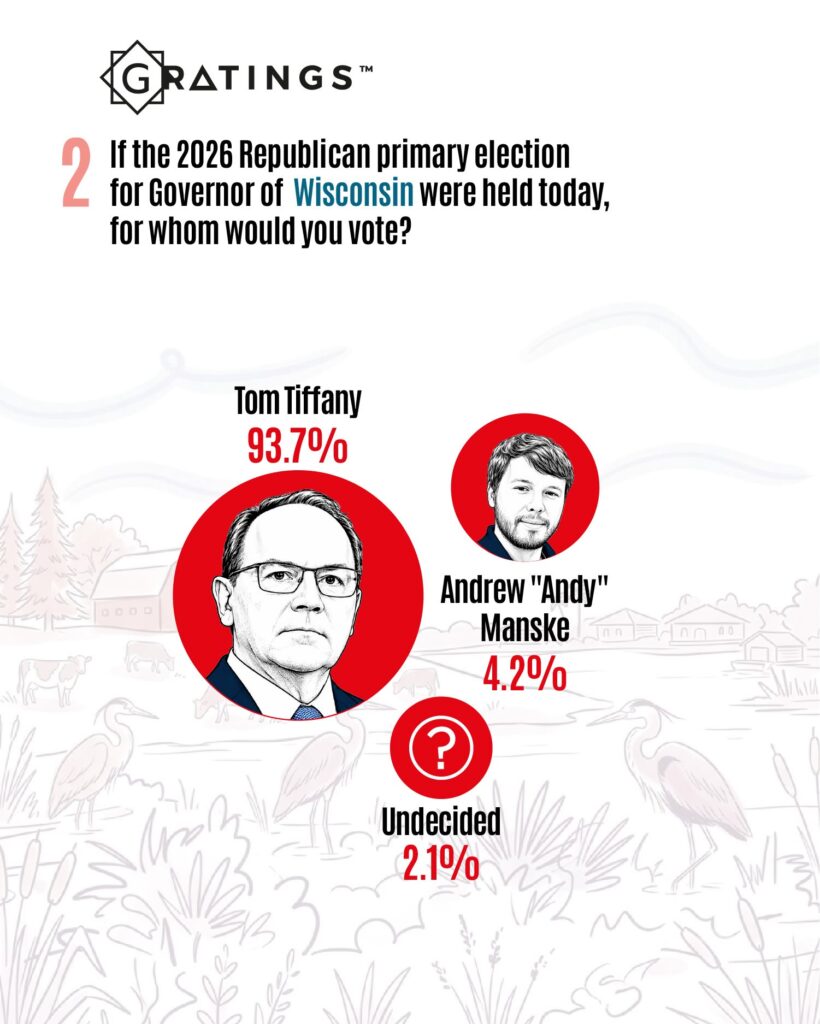
Tom Tiffany dominates the Republican primary
When respondents were asked whom they would support if the 2026 Republican primary for governor were held today, Tom Tiffany received 93.7% of voter preference.
The results were:
- Tom Tiffany: 93.7%
- Andrew “Andy” Manske: 4.2%
- Undecided: 2.1%
Tiffany leads Manske by 89.5 percentage points, giving him a decisive advantage in the Republican nomination contest.
Only 2.1% of respondents remain undecided, indicating that voter preferences in the Republican primary are largely consolidated around Tiffany.
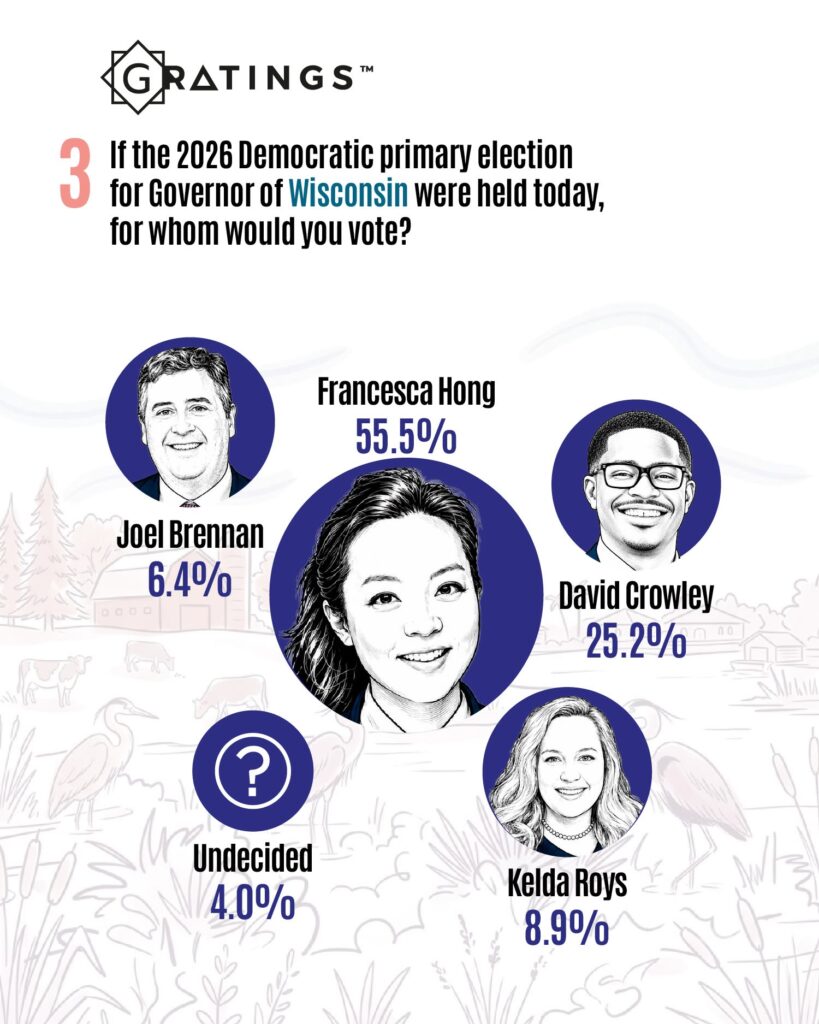
Francesca Hong leads the Democratic primary by more than 30 points
At G Ratings, we also surveyed voter preferences in the 2026 Democratic primary for governor of Wisconsin.
The results place Francesca Hong comfortably ahead of her opponents:
- Francesca Hong: 55.5%
- David Crowley: 25.2%
- Kelda Roys: 8.9%
- Joel Brennan: 6.4%
- Undecided: 4.0%
Hong leads Crowley, her closest competitor, by 30.3 percentage points. Her support also exceeds the combined total received by Crowley, Roys, and Brennan.
Although the Democratic contest is more divided than the Republican primary, Hong currently holds a clear majority with 55.5%.
The undecided share stands at only 4%, suggesting that the Democratic candidates will need to persuade voters who currently support another contender rather than relying primarily on undecided participants.
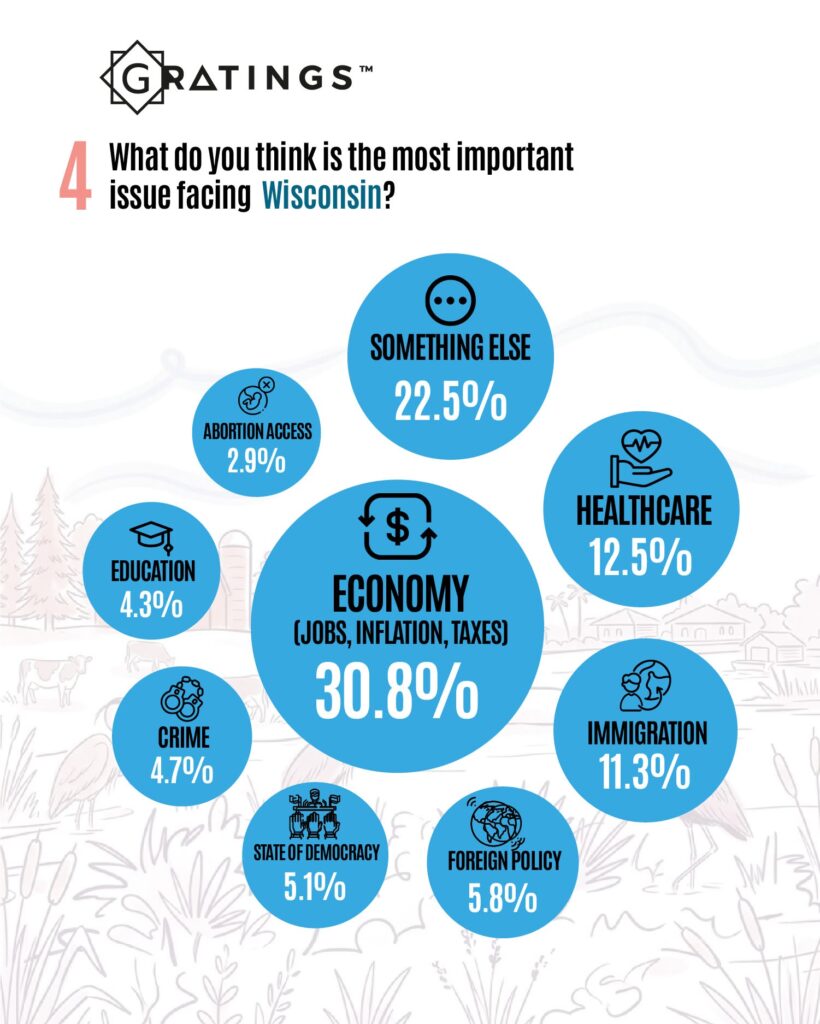
The economy is Wisconsin’s leading concern
At G Ratings, we presented respondents with a list of major issues and asked them to identify the most important challenge facing Wisconsin.
The economy ranked first:
- Economy, including jobs, inflation, and taxes: 30.8%
- Something else: 22.5%
- Healthcare: 12.5%
- Immigration: 11.3%
- Foreign policy: 5.8%
- State of democracy: 5.1%
- Crime: 4.7%
- Education: 4.3%
- Abortion access: 2.9%
Economic concerns received the highest percentage of responses, placing jobs, inflation, and taxes at the center of Wisconsin’s political debate.
The 22.5% who selected “something else” also represents a significant segment of the electorate. This result indicates that many voters are concerned about issues beyond the options presented in the survey.
Healthcare and immigration followed as the next most frequently selected specific issues, receiving a combined 23.8%.
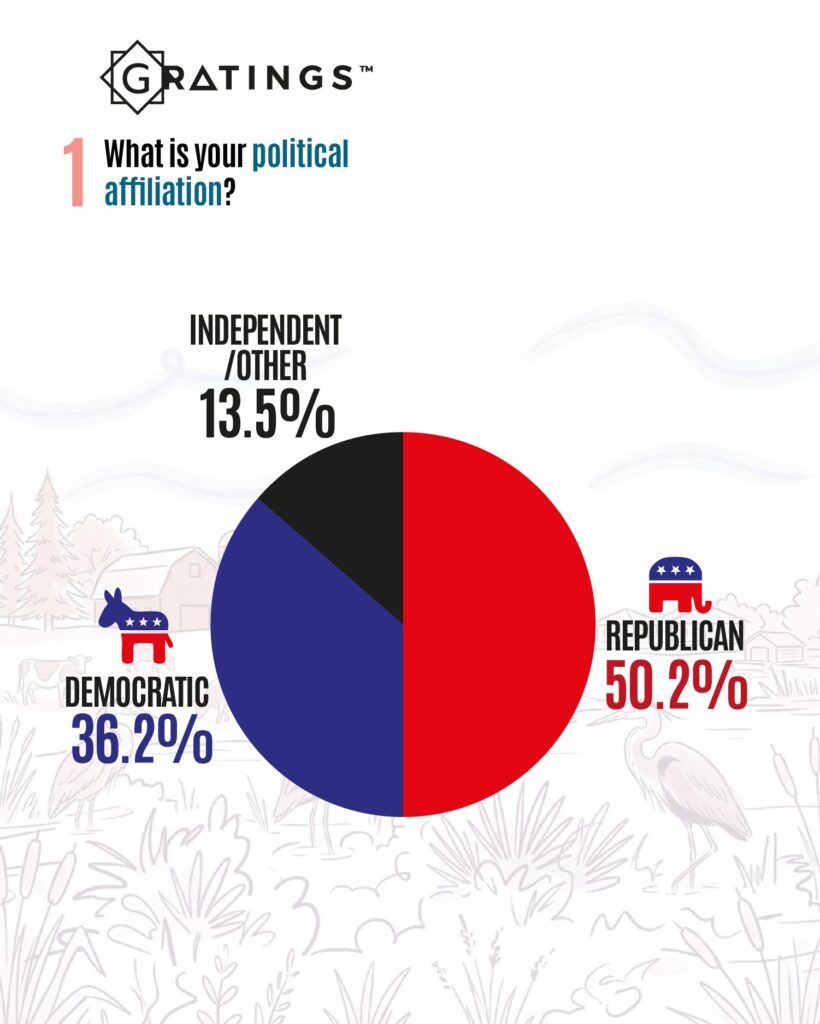
Republicans represent half of the survey sample
When participants were asked about their political affiliation, Republicans accounted for the largest group.
The results were:
- Republican: 50.2%
- Democratic: 36.2%
- Independent or other: 13.5%
Republicans outnumber Democrats by 14 percentage points in the sample. Independent and other voters represent 13.5% of respondents.
Because Wisconsin does not register voters by political party, G Ratings compared respondents’ self-reported party identification with established statewide benchmarks for party identification among registered Wisconsin voters.
Demographic profile of respondents
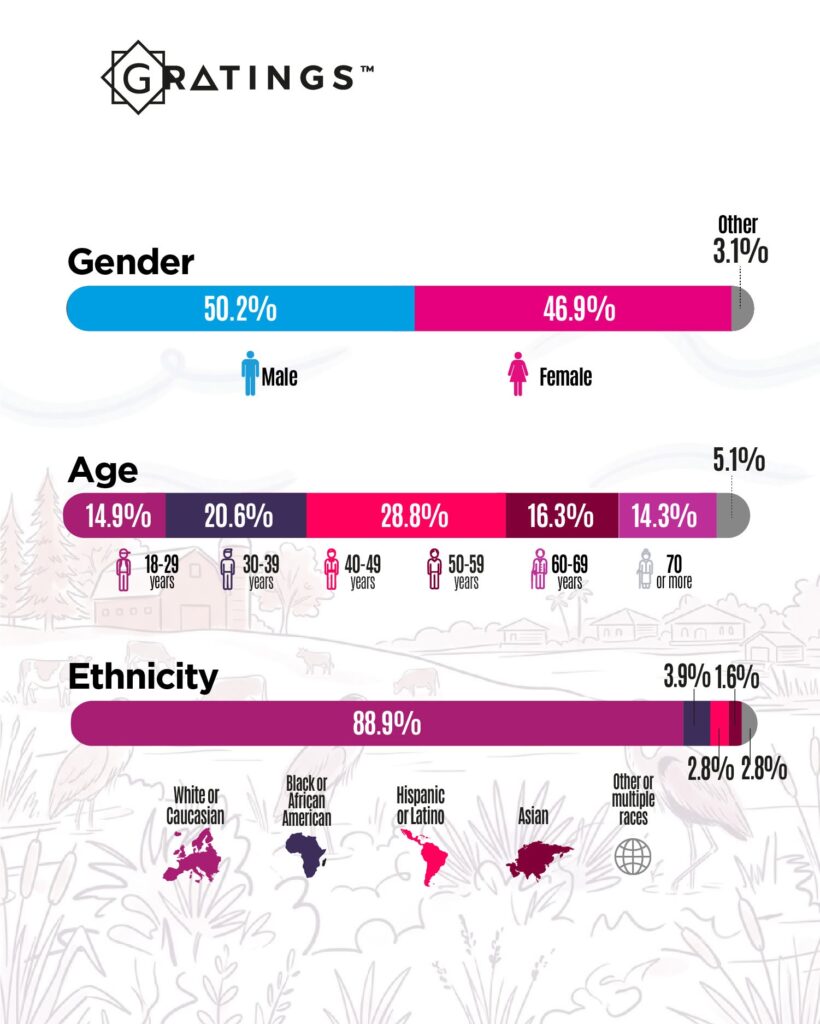
The survey included Wisconsin voters from different gender, age, and ethnic groups.
The gender distribution was:
- Male: 50.2%
- Female: 46.9%
- Other: 3.1%
The age distribution was:
- 18 to 29 years: 14.9%
- 30 to 39 years: 20.6%
- 40 to 49 years: 28.8%
- 50 to 59 years: 16.3%
- 60 to 69 years: 14.3%
- 70 years or older: 5.1%
The ethnic distribution was:
- White or Caucasian: 88.9%
- Black or African American: 3.9%
- Hispanic or Latino: 2.8%
- Other or multiple races: 2.8%
- Asian: 1.6%
Survey methodology
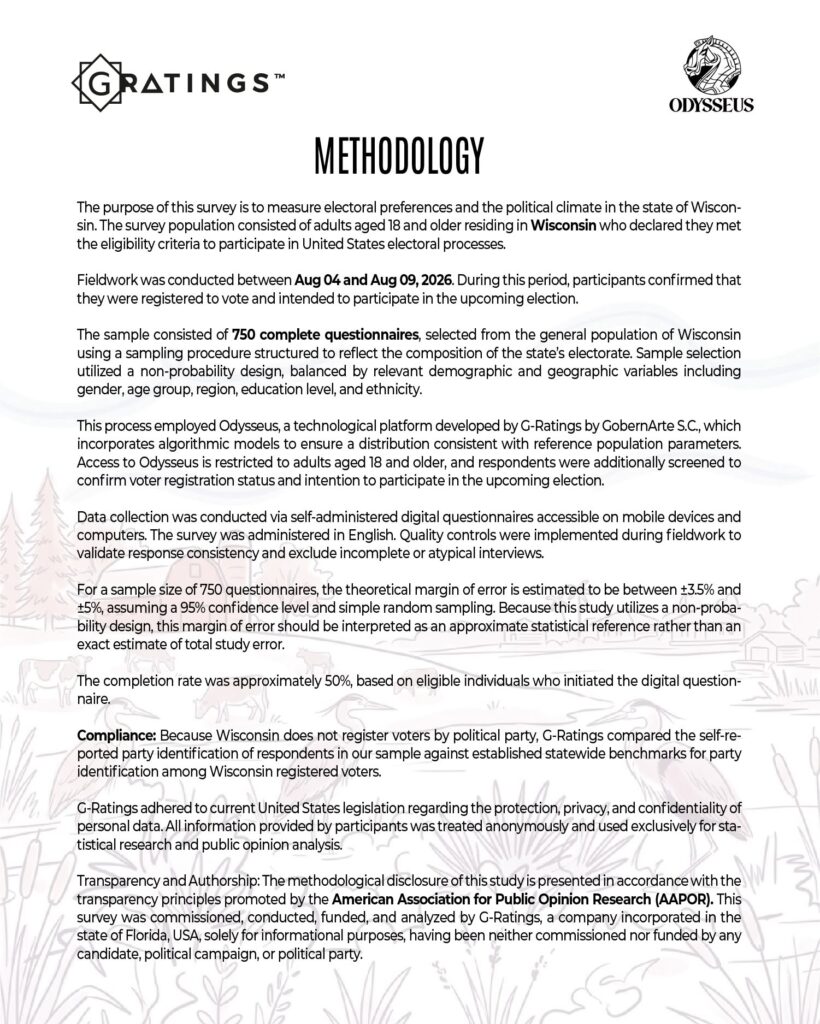
At G Ratings, we conducted the fieldwork from August 4 through August 9, 2026, using self-administered digital questionnaires accessible on mobile devices and computers.
We surveyed 750 Wisconsin residents aged 18 or older who confirmed that they were registered to vote and intended to participate in the upcoming election.
The study used a non-probability sampling design balanced by relevant demographic and geographic variables, including gender, age group, region, education level, and ethnicity.
The data collection process employed Odysseus, a technological platform developed by G Ratings by GobernArte S.C. The platform incorporates algorithmic models and Artificial intelligence tools to maintain a distribution consistent with reference population parameters.
Quality controls were implemented during fieldwork to validate response consistency and exclude incomplete or atypical questionnaires.
For a sample of 750 completed questionnaires, the theoretical margin of error is estimated between ±3.5% and ±5%, assuming a 95% confidence level and simple random sampling. Because the study used a non-probability design, this range should be interpreted as an approximate statistical reference rather than an exact estimate of total study error.
The questionnaire completion rate was approximately 50% among eligible individuals who began the digital survey.
At G Ratings, we present these findings exclusively for informational and public opinion research purposes. The survey was commissioned, conducted, funded, and analyzed by G Ratings. It was not commissioned or funded by any candidate, political campaign, or political party.