
Results


At G Ratings, we conducted a statewide survey in Arizona to measure voter preferences ahead of the 2026 general election for governor, as well as the main issues shaping the political climate across the state.
We surveyed 750 Arizona adults who reported being registered to vote and intending to participate in the upcoming election. Fieldwork was conducted from August 15 through August 20, 2026.
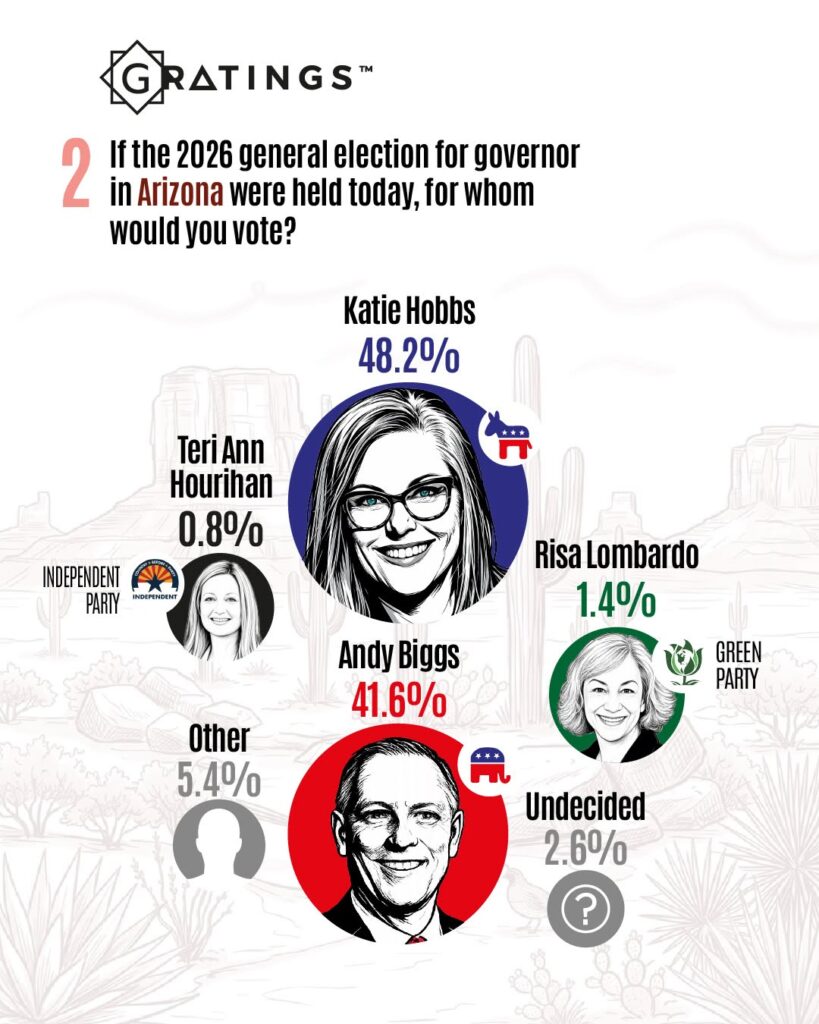
The results show Democratic candidate Katie Hobbs leading the gubernatorial contest with 48.2% of voter preference, followed by Republican candidate Andy Biggs with 41.6%.
This represents a 6.6 percentage-point advantage for Hobbs in the current measurement.
Arizona 2026 governor election: current voter preference
At G Ratings, we present the results of the question: If the 2026 general election for governor in Arizona were held today, for whom would you vote?
- Katie Hobbs: 48.2%
- Andy Biggs: 41.6%
- Other: 5.4%
- Undecided: 2.6%
- Risa Lombardo: 1.4%
- Teri Ann Hourihan: 0.8%
The survey places Hobbs in first position, while Biggs remains within single digits of the Democratic candidate. At the same time, 5.4% selected another option and 2.6% said they remain undecided.
Party affiliation among respondents
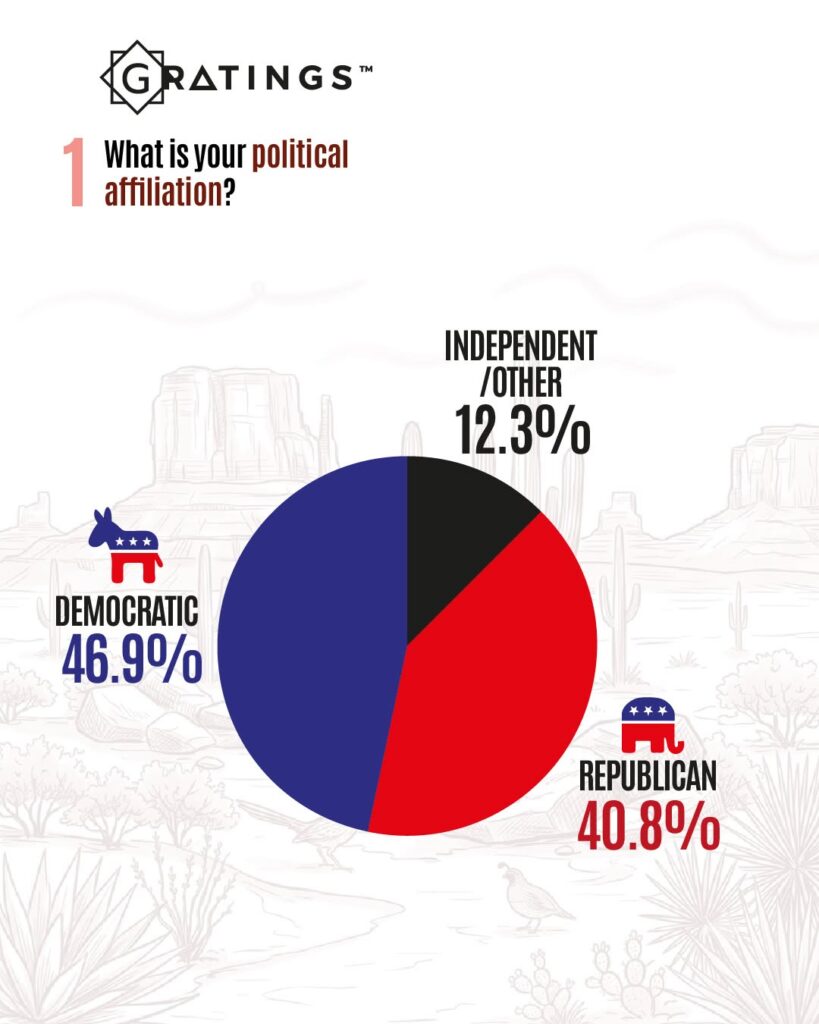
The survey also asked participants to identify their political affiliation. Democrats represented the largest group in the sample, followed by Republicans and voters identifying as independent or with another political affiliation.
- Democratic: 46.9%
- Republican: 40.8%
- Independent/Other: 12.3%
These figures provide additional context for interpreting voter preference in the Arizona gubernatorial race.
The economy is Arizona voters’ top concern
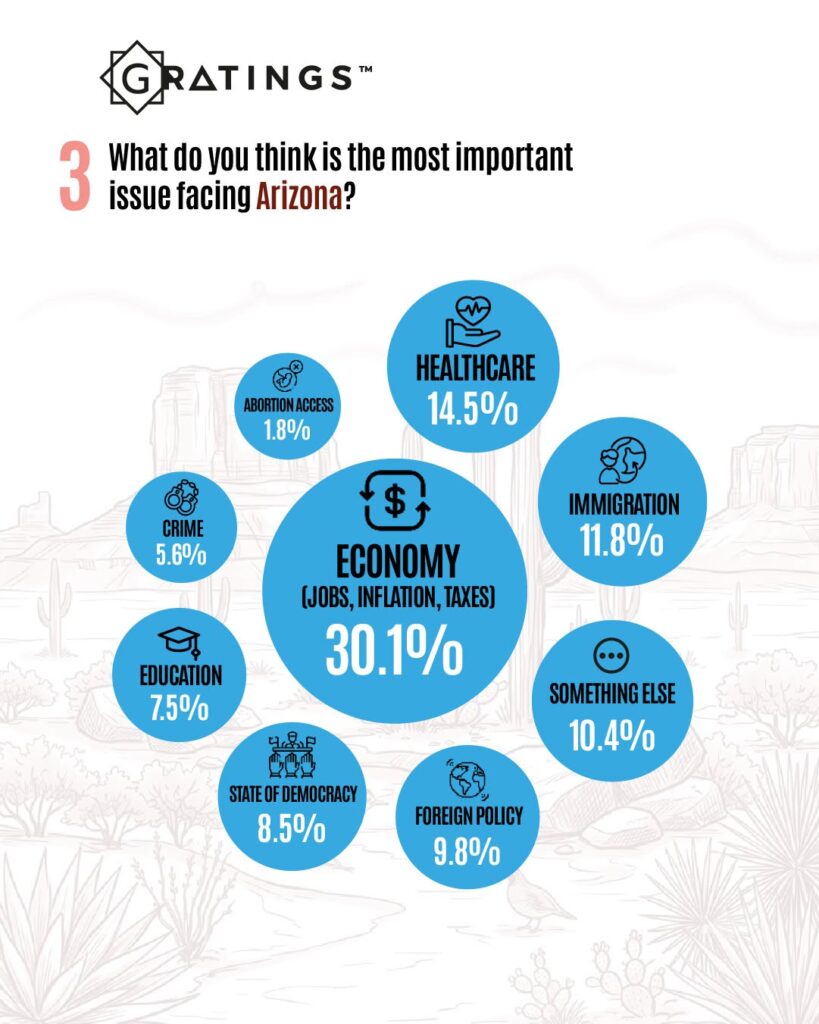
Beyond candidate preference, at G Ratings we also asked respondents to identify the most important issue currently facing Arizona.
The economy, including jobs, inflation and taxes, ranked first with 30.1%, making it the most frequently cited concern by a considerable margin.
- Economy — jobs, inflation and taxes: 30.1%
- Healthcare: 14.5%
- Immigration: 11.8%
- Something else: 10.4%
- Foreign policy: 9.8%
- State of democracy: 8.5%
- Education: 7.5%
- Crime: 5.6%
- Abortion access: 1.8%
The findings indicate that economic concerns are currently dominating the Arizona political conversation. Healthcare and immigration rank second and third, while other national and state-level issues remain important to smaller segments of voters.
A race shaped by economic concerns
The G Ratings survey presents an electoral environment in which candidate preference and economic priorities are closely connected to the broader political climate.
With Hobbs at 48.2% and Biggs at 41.6%, the survey shows a measurable Democratic advantage at this stage of the race. However, the presence of undecided voters and respondents supporting other options means voter preferences could still shift as the election approaches.
At the same time, the 30.1% recorded by the economy suggests that jobs, inflation and taxes may play a central role in how Arizona voters evaluate the candidates and their proposals during the campaign.
Survey methodology
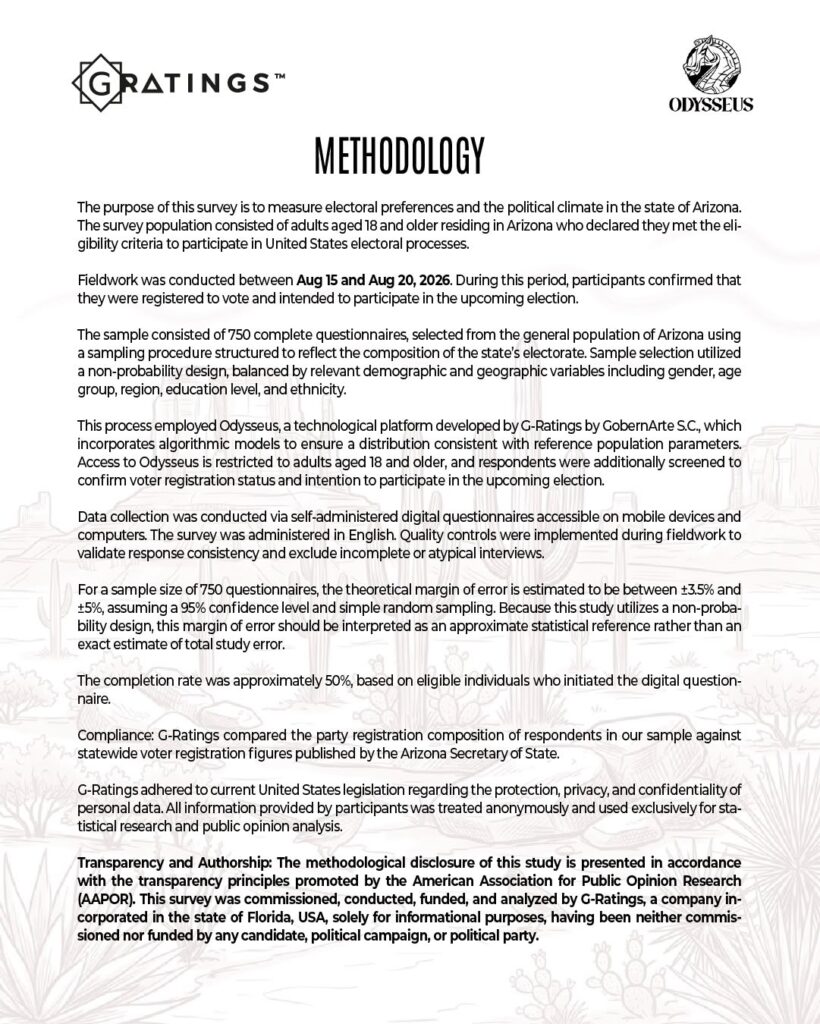
At G Ratings, we surveyed 750 adults aged 18 and older residing in Arizona who indicated that they were registered to vote and intended to participate in the upcoming election.
Fieldwork was conducted between August 15 and August 20, 2026. The survey used self-administered digital questionnaires accessible through mobile devices and computers.
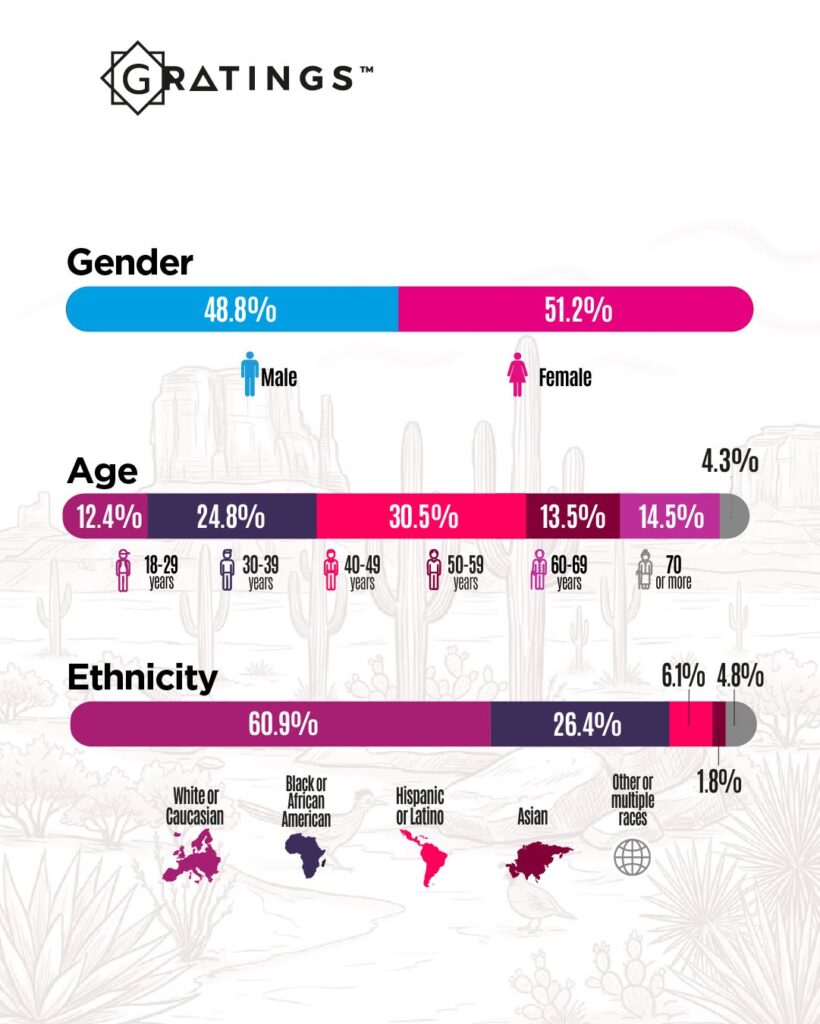
The sample was structured to reflect relevant demographic and geographic characteristics of Arizona’s electorate, including gender, age group, region, education level and ethnicity.
The study used Odysseus, G Ratings’ technological platform developed by G-Ratings by GobernArte S.C., incorporating algorithmic models designed to support sample distribution using population reference parameters.
Because the study uses a non-probability design, the reported theoretical margin of error of approximately ±3.5% to ±5% at a 95% confidence level should be interpreted as a statistical reference rather than an exact estimate of total survey error.
The study was commissioned, conducted, funded and analyzed by G Ratings for informational purposes and was not commissioned or funded by any candidate, political campaign or political party.