
Results


At G Ratings, we conducted a statewide survey to measure electoral preferences and the political climate ahead of the 2026 general election in Georgia. The results point to a highly competitive race for governor, with Democratic and Republican candidates separated by just over one percentage point.
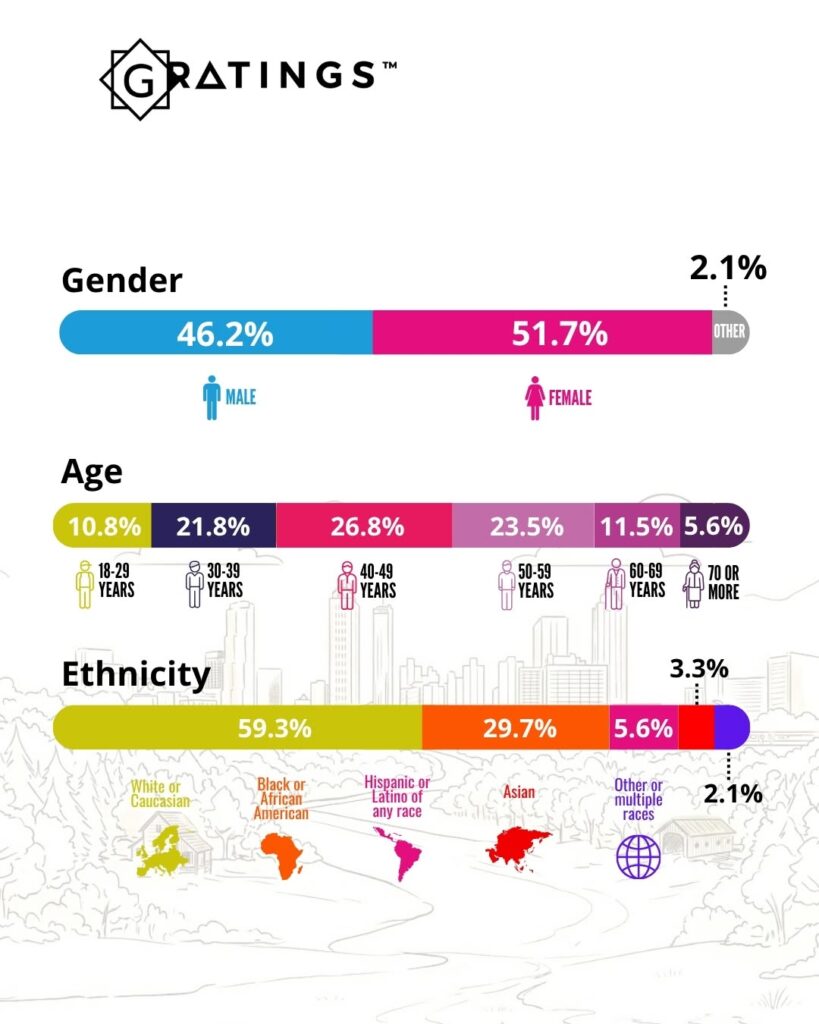
We surveyed 950 registered voters in Georgia who said they intended to participate in the upcoming election. Fieldwork was conducted between August 25 and August 30, 2026, providing a snapshot of voter sentiment as the state moves closer to Election Day.
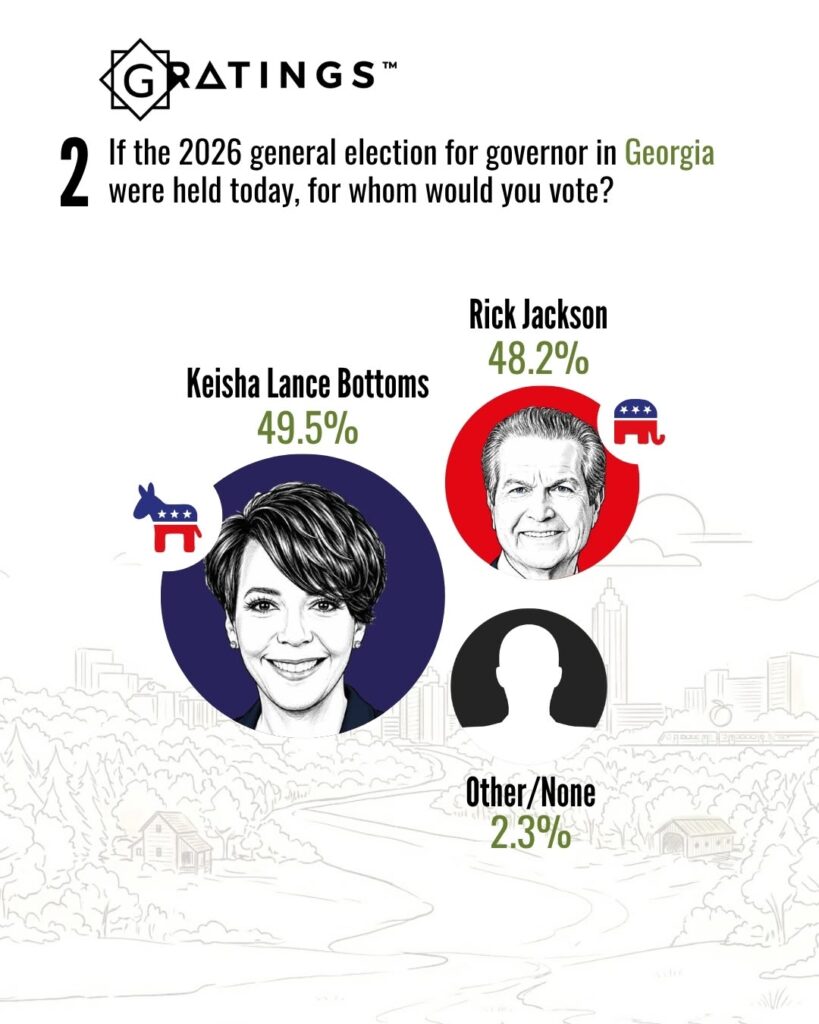
In the race for governor, Keisha Lance Bottoms leads with 49.5%, while Republican Rick Jackson receives 48.2%. Only 2.3% selected another candidate or none of the options, leaving the two major-party contenders nearly tied.
Georgia governor election 2026: Bottoms leads Jackson by 1.3 points
At G Ratings, we present the results of the question: If the 2026 general election for governor in Georgia were held today, for whom would you vote?
- Keisha Lance Bottoms: 49.5%
- Rick Jackson: 48.2%
- Other/None: 2.3%
The difference between the two leading candidates is 1.3 percentage points, reflecting a closely divided electorate in one of the country’s most politically competitive states.
The survey does not show a dominant advantage for either major party in the gubernatorial contest. Instead, the results suggest that relatively small movements in voter preference could alter the balance of the race as the campaign develops.
Jon Ossoff leads the Georgia U.S. Senate race
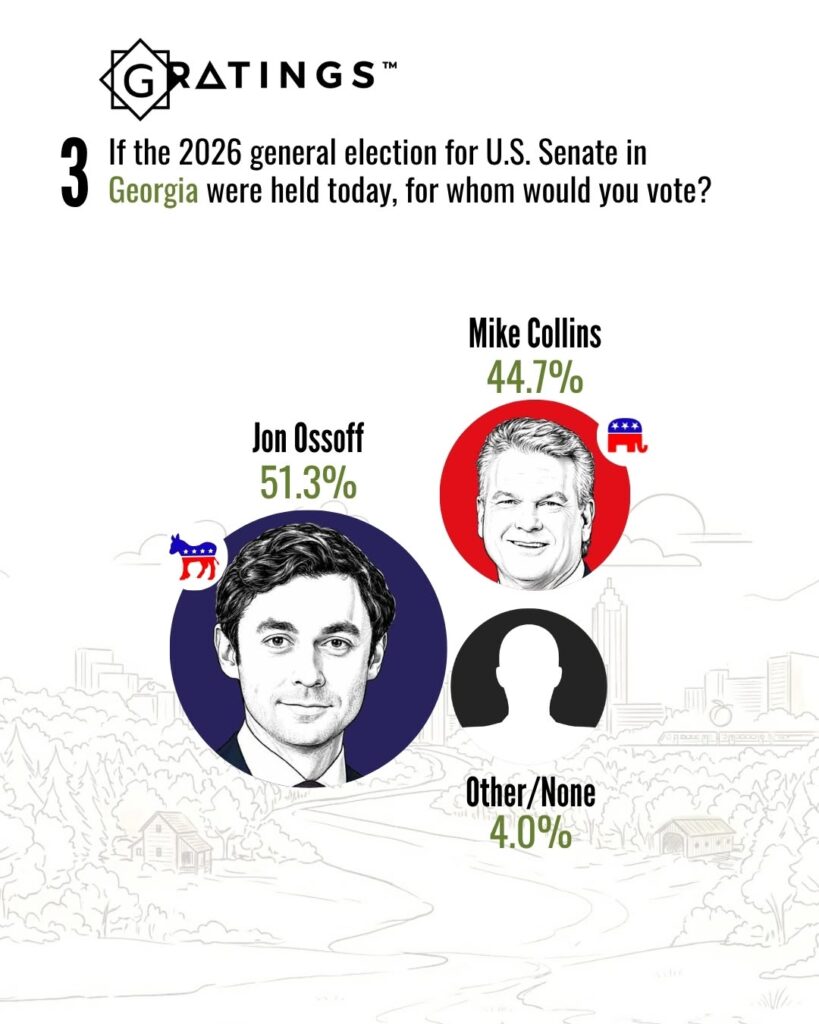
The G Ratings survey also measured voter preference in Georgia’s 2026 U.S. Senate election.
At G Ratings, we present a stronger Democratic advantage in this contest. Senator Jon Ossoff receives 51.3%, compared with 44.7% for Republican Mike Collins.
- Jon Ossoff: 51.3%
- Mike Collins: 44.7%
- Other/None: 4.0%
Ossoff’s advantage stands at 6.6 percentage points, a wider margin than the one recorded in the gubernatorial race.
The results indicate that Georgia voters may be evaluating the two statewide contests differently. While the race for governor is nearly even, the Senate contest currently shows a more defined advantage for the Democratic candidate.
Political affiliation shows a closely divided Georgia electorate
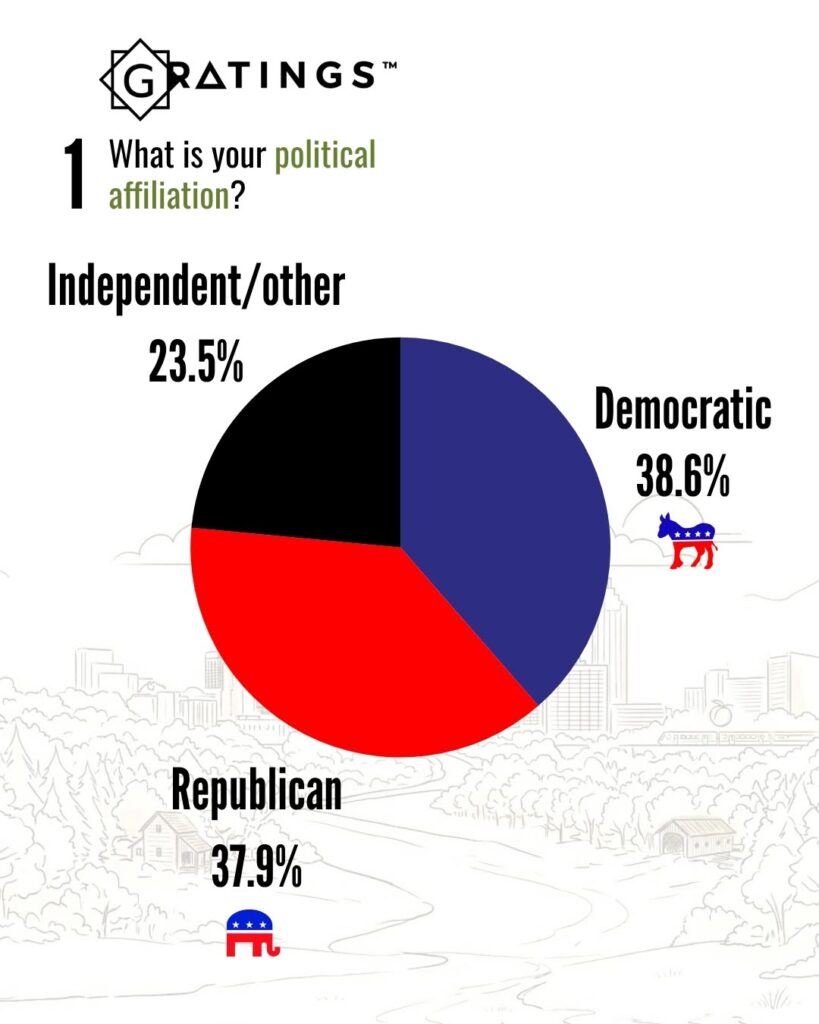
At G Ratings, we also asked respondents about their political affiliation to better understand the composition of the electorate participating in the study.
- Democratic: 38.6%
- Republican: 37.9%
- Independent/Other: 23.5%
Democrats and Republicans are separated by only 0.7 percentage points among respondents, while nearly one-quarter identify as independent or with another political affiliation.
This distribution reinforces the competitive nature of Georgia’s political environment and highlights the potential importance of independent voters in statewide races.
Economy is one of the leading concerns for Georgia voters
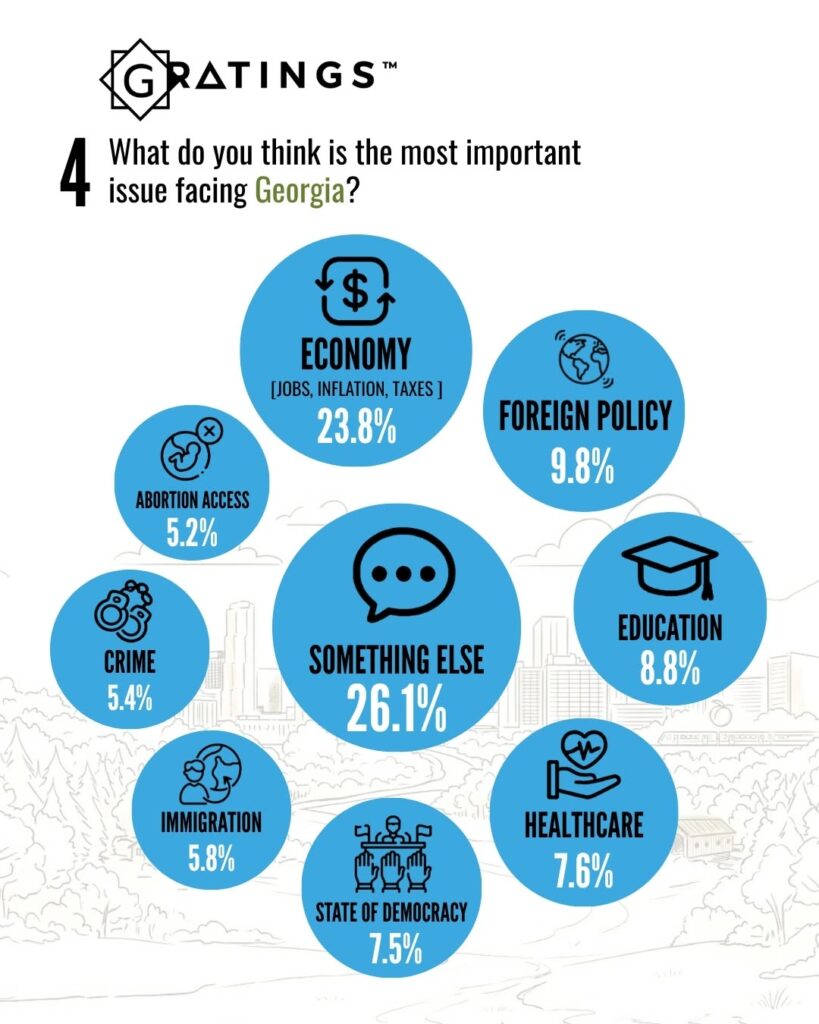
Beyond electoral preferences, we surveyed participants about what they consider the most important issue facing Georgia.
The largest individual response was “Something else” at 26.1%, followed closely by the economy at 23.8%. Economic concerns included jobs, inflation and taxes.
The complete results were:
- Something else: 26.1%
- Economy — jobs, inflation and taxes: 23.8%
- Foreign policy: 9.8%
- Education: 8.8%
- Healthcare: 7.6%
- State of democracy: 7.5%
- Immigration: 5.8%
- Crime: 5.4%
- Abortion access: 5.2%
Although no single issue commands a majority, the economy stands out as the most frequently selected specific policy concern in the survey.
The findings also reveal a broad distribution of priorities among Georgia voters. Foreign policy, education, healthcare, democracy, immigration, crime and abortion access all register as relevant issues heading into the 2026 election.
Georgia enters 2026 with two different statewide races
The results presented by G Ratings show two distinct electoral scenarios.
In the governor’s race, Keisha Lance Bottoms and Rick Jackson are separated by only 1.3 points, creating a contest that remains highly competitive.
In the U.S. Senate race, Jon Ossoff holds a 6.6-point advantage over Mike Collins, giving Democrats a stronger position in that contest according to this measurement.
At the same time, Georgia’s political affiliation numbers remain almost evenly divided between Democrats and Republicans, with independents and other voters representing a significant segment of the electorate.
These figures illustrate why Georgia remains an important state to watch during the 2026 election cycle.
Survey methodology
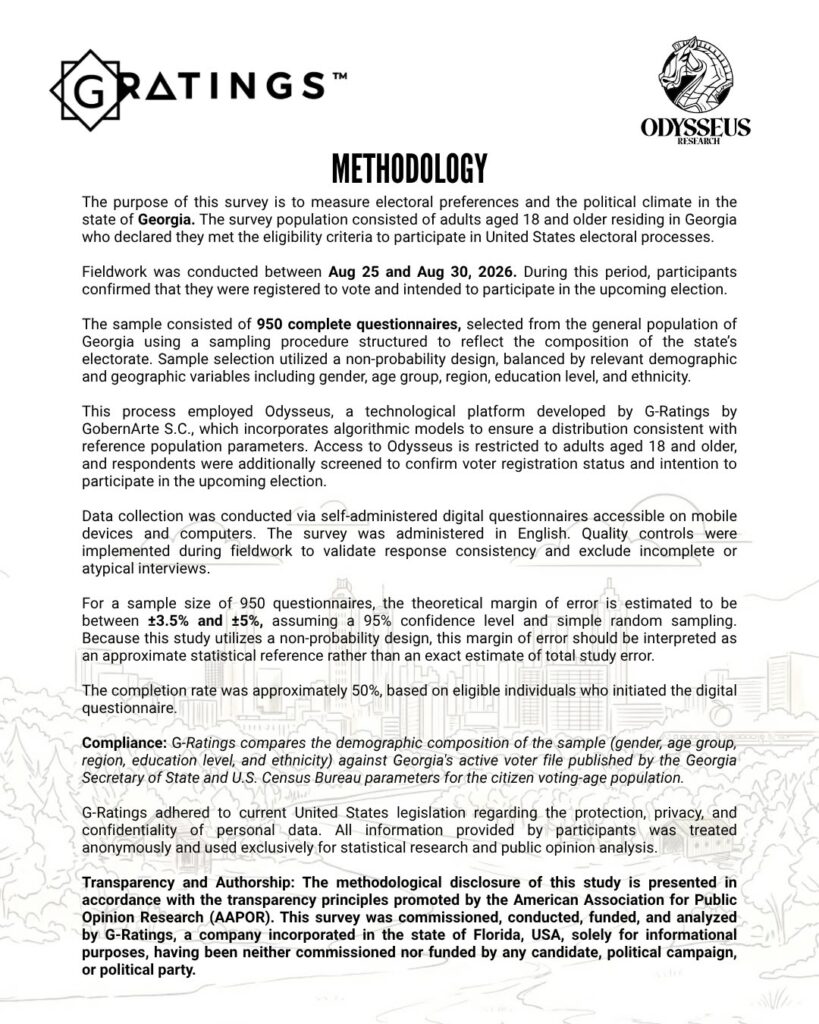
At G Ratings, we surveyed 950 adults aged 18 and older residing in Georgia who reported meeting the eligibility requirements to participate in United States electoral processes.
Participants confirmed that they were registered to vote and intended to participate in the upcoming election. Fieldwork was conducted from August 25 through August 30, 2026.
The sample was structured to reflect relevant demographic and geographic characteristics of Georgia’s electorate, including gender, age group, region, education level and ethnicity.
Data collection was conducted through self-administered digital questionnaires accessible on mobile devices and computers. The survey was administered in English.
The study used Odysseus, a technological platform developed by G-Ratings by GobernArte S.C., which incorporates algorithmic models to support the distribution of the sample according to population reference parameters.
The survey used a non-probability design. For a sample of 950 questionnaires, the theoretical margin of error was estimated between ±3.5% and ±5%, assuming a 95% confidence level and simple random sampling. Because the study used a non-probability methodology, this figure should be interpreted as an approximate statistical reference.
The survey was commissioned, conducted, funded and analyzed by G Ratings for informational purposes and was not commissioned or funded by any candidate, political campaign or political party.